- 2–3 days Recommended city time
- 130 km Munich to Neuschwanstein
- ~1h10 Munich to Nuremberg by ICE
- ~1h45 Munich to Salzburg by train
- €63/mo Deutschland-Ticket 2026
Munich + Neuschwanstein: the trip most people plan but few optimise
Munich is a compact, walkable city with an excellent public-transport network — most central attractions sit within a 15-minute walk of Marienplatz, and the U-Bahn and S-Bahn cover everything else. Give it 2–3 full days and you'll cover the Old Town, one of the major palaces, a world-class museum, the English Garden, and an obligatory beer hall. Then add a dedicated full day south to the Alps.
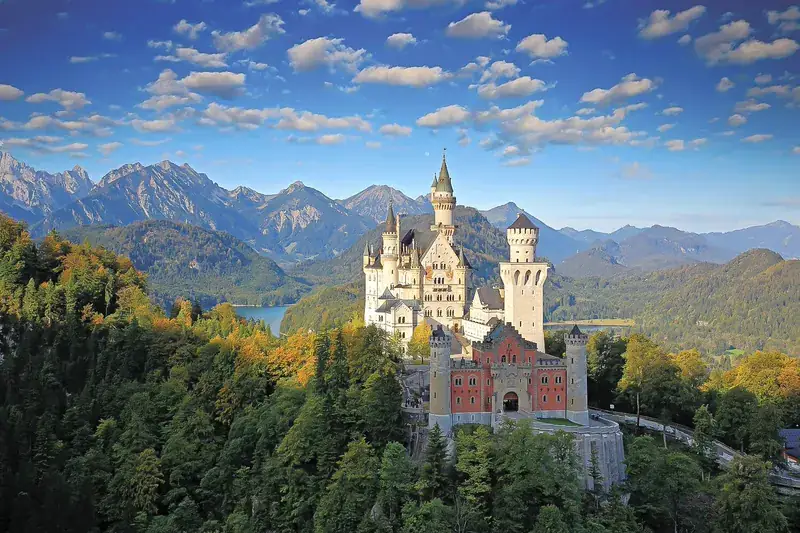
The Neuschwanstein + Linderhof day trip runs about 10.5 hours door-to-door from Munich — long enough that combining it with city sightseeing on the same day defeats the purpose of both. Reserve it as its own day. Since the July 2025 UNESCO inscription of Neuschwanstein, Linderhof, Herrenchiemsee, and Schachen as Germany's 55th World Heritage Site, demand has increased and interior ticket slots sell out faster than ever — read our tickets and booking guide before committing to dates.
For the castle day trip specifically: getting to Neuschwanstein from Munich · tickets, prices & booking · inside the castle — rooms & views · practical visitor FAQ
Other experiences you might enjoy
Munich is the natural base for some of Germany's finest day trips and a castle circuit that no other German city can match. The flagship excursion is the full-day coach south to Neuschwanstein Castle and Linderhof Palace — King Ludwig II's two UNESCO-listed creations — which pairs beautifully with a visit to Hohenschwangau Castle in the same valley, where Ludwig grew up surrounded by swan imagery and Wagnerian murals. For a completely different tone, the Dachau Concentration Camp Memorial (about 50 minutes by S-Bahn, free admission) is the most important historical half-day from Munich. Mountain lovers can take the train to Garmisch-Partenkirchen for the cable car to the Zugspitze summit, Germany's highest peak. Heading east, Herrenchiemsee — Ludwig's Versailles-inspired island palace, now jointly UNESCO-listed with Neuschwanstein — makes an excellent second castle day. And the Bavarian lakes, Berchtesgaden, Salzburg, and Nuremberg are all within comfortable day-trip range by train.
Munich's top city attractions
Munich's Old Town core is compact enough to cover the essentials in a day on foot, with the U-Bahn and trams filling in the gaps. Here are the highlights worth planning around:
Marienplatz and the Glockenspiel
Munich's central square since the 12th century, dominated by the neo-Gothic New Town Hall (Neues Rathaus). The Glockenspiel carillon performs daily at 11 a.m. and 12 p.m. year-round (plus 5 p.m. from March through October), re-enacting two 16th-century scenes over about 12 minutes. Climb the Rathausturm for Old Town views, or cross the square to St. Peter's Church ("Alter Peter") for arguably the best rooftop panorama in the city centre.
English Garden (Englischer Garten)
One of the world's largest urban parks — open 24/7 and free. The Chinese Tower beer garden seats around 7,000 and is Munich's second-largest; the Monopteros temple offers a hilltop Old Town view; and year-round surfers ride the famous Eisbach standing wave at the park's southern entrance. A must-do free activity in any season.
Munich Residenz
Germany's largest city palace and the Wittelsbachs' seat of power for four centuries, with over 130 rooms including the 66-metre Antiquarium (the largest Renaissance hall north of the Alps), the jewel-filled Treasury, and the Rococo Cuvilliés Theatre. 2026 prices: Museum €10 / Treasury €10 / combined €15 / triple combo including Cuvilliés €20. Under-18s free. The Hofgarten behind it is free.
Nymphenburg Palace
The Wittelsbach family's Baroque summer residence, west of the centre (tram lines 12/16/17). Highlights include the Rococo Great Hall, the Gallery of Beauties, and the room where Ludwig II was born. The vast park is free; palace open daily from approximately 9 a.m.–6 p.m. in summer. Worth pairing with the BMW Welt showroom (free) and BMW Museum nearby.
Viktualienmarkt & beer culture
A gourmet open-air food market (closed Sundays) since 1807, just south of Marienplatz — ideal for assembling a picnic or a quick Bavarian lunch. The 16th-century Hofbräuhaus is the city's most famous beer hall and a genuine cultural landmark, though heavily touristed; many locals recommend one Maß (€9–11) for the experience, then a less-touristed beer garden for the meal. Munich's beer gardens allow you to bring your own food and buy only drinks — a great money-saver in summer.
Deutsches Museum
One of the world's largest science and technology museums, on an island in the Isar River. Day ticket €16 (reduced €9). The museum reopened its first renovated half in July 2022 with 19 new exhibitions; a second construction phase continues, so some departments are currently closed — check the current plan before visiting.
Suggested Munich itinerary: 2–4 days

1 day (essentials only): The Old Town loop — Marienplatz and the Glockenspiel at noon, climb Alter Peter, browse Viktualienmarkt for lunch, tour the Residenz, stroll the English Garden and watch the Eisbach surfers, then dinner at a beer hall. You've covered Munich's core in a day.
2 days: Day 1 as above. Day 2: either the full-day Neuschwanstein + Linderhof castle trip (the flagship; needs the whole day and requires booking timed castle tickets well in advance) — or a deeper Munich day covering Nymphenburg Palace, Olympiapark, and BMW Welt. Do whichever you haven't done on Day 3 if you have it.
3 days: The sweet spot. Day 1: Old Town + beer hall. Day 2: Neuschwanstein + Linderhof as a dedicated full day. Day 3: Nymphenburg Palace + English Garden afternoon + any museum from the Kunstareal (Alte Pinakothek, Pinakothek der Moderne, Museum Brandhorst). Alternatively swap Day 3 for a second day trip — Salzburg, Nuremberg, or Dachau.
4 days: Add both the castle day trip and a second day trip. Popular combinations: Neuschwanstein Day + Salzburg Day; or Neuschwanstein Day + Dachau half-day + afternoon at the Deutsches Museum.
2026 planning notes: Oktoberfest runs 19 September–4 October 2026 — book accommodation and beer-tent reservations months ahead; hotel prices triple. The Marienplatz Christkindlmarkt runs 20 November–24 December 2026. Both periods are great for atmosphere but expensive. For best value and manageable crowds, target May–June or the first half of September.
Best day trips from Munich
Neuschwanstein + Linderhof Palace — the flagship
King Ludwig II's two most celebrated creations, both now UNESCO World Heritage Sites (inscribed July 2025), are the obvious anchor day trip from Munich. The full-day coach from Karlsplatz 21 visits both castles in about 10.5 hours, with audio commentary in 9 languages and interior ticket options purchasable on board. See our full transport comparison if you prefer the DIY train route, or our practical visitor FAQ for what to expect on site.
Dachau Concentration Camp Memorial Site
The most important historical day trip from Munich: the first Nazi concentration camp, opened March 1933. Take the S2 S-Bahn from Munich Hauptbahnhof to Dachau (~25 min) or the faster RB16 regional train (~11 min), then bus 726 (~10 min) to the memorial. Admission is free in 2026; audio guide €4.50, guided tour €3.00. Open Tuesday–Sunday 9 a.m.–5 p.m. (verify Monday closure on the official site before visiting). Allow 2.5–4 hours. Covered by an MVV day ticket.
Salzburg, Austria
About 1h45 by train (fastest ~1h30 on ÖBB railjet), with roughly hourly express services. A Bayern-Ticket covers the Austrian leg on slower regional trains, making it one of the most affordable day trips from Munich. Highlights: Hohensalzburg Fortress, the Cathedral, Residenzplatz, and Mozart's birthplace. No passport required within the Schengen Area.
Nuremberg
~1h10 by ICE (up to 60 direct trains daily). Walk straight from the station into a beautifully preserved medieval old town with the Imperial Castle, Hauptmarkt, and some of Germany's best Christmas market atmosphere in December. Excellent ratio of travel time to sightseeing — among the strongest pure day trips from Munich.
Zugspitze via Garmisch-Partenkirchen
Germany's highest peak (2,962 m). Direct regional trains Munich → Garmisch-Partenkirchen run about 1h10–1h26, then the Bayerische Zugspitzbahn cog railway and cable car to the summit. 2026 adult round-trip "Ticket Zugspitze" is €78.00 (valid from 23 May 2026), with a discount for arrivals with a valid DB rail ticket. The cable car runs year-round, weather permitting.
Berchtesgaden / Eagle's Nest and Königssee
About 2.5–3 hours by train (via Freilassing to Berchtesgaden Hbf), then bus 838 to Obersalzberg and the special Kehlstein bus 849. The Eagle's Nest 2026 season opens Thursday, 7 May and runs to late October (closed in winter). Adult bus + elevator round-trip €34.70. The ticket includes same-day free entry to the Dokumentation Obersalzberg. Nearby Königssee offers scenic electric-boat cruises to St. Bartholomä.
Herrenchiemsee — Ludwig's Versailles on a lake island
King Ludwig II's Versailles-inspired New Palace, on an island in Bavaria's largest lake, now jointly inscribed as UNESCO World Heritage alongside Neuschwanstein. Train Munich → Prien am Chiemsee (~1 hour), then a historic steam tram or walk to the harbour, then a ~15–20 min boat. 2026 boat fare round-trip €11.50 adult; palace combination ticket €11/€10 (rising to €14/€13 during the special exhibition 18 May–18 October 2026). Under-18s free.
Regensburg
UNESCO-listed medieval city on the Danube (founded as a Roman camp in 179 CE), reachable by regional or express train. A lively university city with an impressively intact old town — less-visited than Nuremberg but equally rich historically.
Munich public transport and best time to visit
MVV public transport for visitors
Munich's MVV network integrates U-Bahn, S-Bahn, trams, and buses on a single ticket system organised into zones (Zone M covers the city centre). Buy via the MVV or MVGO apps, machines, or online. Key 2026 fares for Zone M:
- Single ticket €4.20 · Single day ticket €10.10 · Group day ticket (up to 5 adults) €19.70
- New for 2026: children aged 6–14 travel free on a Single Day Ticket (up to 3 children per adult ticket-holder)
- Deutschland-Ticket: €63/month, valid on all local/regional transport nationwide — worth it only for longer stays with multiple regional trips
- Bayern-Ticket: good value for a single same-day Bavarian round-trip (e.g. to Salzburg, Nuremberg, or Füssen for Neuschwanstein)
Note: from March 2026 major construction begins for Munich's second S-Bahn trunk line. Daytime Old Town sightseeing is unaffected, but expect periodic night and weekend S-Bahn disruptions through 2026 — check s-bahn-muenchen.de/baustellen or the MVV app before early-morning day-trip departures.
Best time to visit Munich
Shoulder season (May–June, September): the best overall window — pleasant temperatures for outdoor sightseeing and beer gardens, Neuschwanstein's Marienbrücke open, and significantly fewer visitors than peak summer. September overlaps with the opening of Oktoberfest (see below) so the first two weeks of the month are the sweet spot.
Oktoberfest, 19 September–4 October 2026: free entry to the festival grounds, but accommodation books out months ahead at triple the usual price. Beer tent reservations are strongly advised for evenings and weekends.
Christmas markets, 20 November–24 December 2026: the Marienplatz Christkindlmarkt and a dozen neighbourhood markets make Munich one of Germany's most atmospheric December destinations. Prices are lower than Oktoberfest.
Summer (July–August): peak season — longest days, everything open, beer gardens at their best, but more crowded and expensive across the board.
Winter (December–February): cold but atmospheric; Starkbierfest strong-beer festival in late winter. Note that Neuschwanstein's Marienbrücke viewpoint regularly closes for ice in this period.
Neuschwanstein & Linderhof: two UNESCO castles in one day from Munich
$88 · ★ 4.6 (15,000+ reviews) · ~10.5 hours · Free 24-hour cancellation
This full-day coach from Karlsplatz 21 is Munich's most-reviewed castle day trip — visiting Neuschwanstein and Linderhof Palace, both inscribed as UNESCO World Heritage Sites in July 2025, in a single 10.5-hour day. It handles the round-trip transfer, secures the Neuschwanstein interior slot in advance, and provides audio commentary on Ludwig II's biography in 9 languages. A lunch stop in Hohenschwangau village gives time to visit Ludwig's yellow childhood home across the valley.
- Round-trip coach from Karlsplatz 21 (Stachus), Munich
- Neuschwanstein + Linderhof in one 10.5-hour day
- Audio commentary in 9 languages (subject to availability)
- Interior tickets optional (€42 adult, paid on bus by card)
- Free cancellation up to 24 hours before
Prefer a smaller group with skip-the-line entry included? The premium small-group tour ($226, ★ 4.8) includes castle entry, snacks, and a live English guide throughout.
From $88. Availability and final price on GetYourGuide.
Munich & day trips FAQ
How many days in Munich do I need before going to Neuschwanstein?
Two to three days in Munich is the recommended minimum. Two days lets you cover the Old Town (Marienplatz, Residenz, English Garden), one beer hall, and one museum — then dedicate a full third day to Neuschwanstein and Linderhof. With four days you can comfortably add a second day trip such as Salzburg or Nuremberg. Because the Neuschwanstein + Linderhof coach is a 10.5-hour commitment, it should be its own separate day, not combined with Munich city sightseeing.
What is the best day trip from Munich?
Neuschwanstein Castle combined with Linderhof Palace is Munich's most popular and most-reviewed day trip — covering both of King Ludwig II's UNESCO-listed palaces in about 10.5 hours from Karlsplatz 21. Other strong options by interest: Dachau Memorial (historical, ~50 min each way, free admission); Salzburg (~1h45 by train, no passport needed); Nuremberg (~1h10 by ICE, medieval old town); the Zugspitze via Garmisch-Partenkirchen (Germany's highest peak); and Berchtesgaden / Eagle's Nest (open May–October only).
Is Oktoberfest worth planning a trip around?
Yes, if you enjoy large festivals and plan well ahead. Oktoberfest 2026 runs 19 September–4 October on the Theresienwiese, with free entry to the festival grounds. But hotels in Munich triple in price and book out months in advance, and beer tent reservations are strongly advised for evenings and weekends. The upside: September is also excellent timing for a Neuschwanstein day trip — shoulder-season crowds and Marienbrücke fully open.
Can I get from Munich to Neuschwanstein by train?
Yes — take the Munich–Füssen regional train (about 2 hours, roughly hourly) then bus #73 or #78 to Hohenschwangau (~8 min). The DIY train route is cheaper than a guided coach but means handling your own timed interior ticket (book well ahead on the official ticket shop) and managing the uphill walk or shuttle from the village. A Bayern-Ticket makes the same-day round-trip affordable. See our full transport comparison — train vs coach vs car for realistic times and costs.